
The Ancient Treasures of Sudan
A Language Undeciphered, the Largest Number of Pyramids in the World, and Vibrant Trade
Sudan, not Egypt, holds the largest number of pyramids in the world, with more than 200 pyramids built by ancient Nubian civilizations such as the Kingdom of Kush — outnumbering Egypt’s pyramid count. Sudan was once home to the National Museum of Sudan in Khartoum, which held one of the most comprehensive collections of archaeological treasures from across the Nile Valley’s civilizations. As a historic bridge between the Mediterranean world and Africa, Sudan — the third-largest country in Africa by land area — has had an illustrious and complex history.
The ancient history of Sudan can be broadly divided into three major periods:
The Kerma (Early Nubian) Period (c. 2500–1500 BCE)
This period marks the rise of the first indigenous Nubian state, centered at Kerma, located in what is today northern Sudan near the city of Dongola, along the Nile River. Kerma was a powerful, independent kingdom with its own urban centers, burial traditions, and long-distance trade networks.The Kingdom of Kush – Napatan Period (c. 800–300 BCE)
The Kingdom of Kush emerged after Egypt’s New Kingdom withdrew from Nubia, with its political and religious capital at Napata, near modern-day Karima, close to Jebel Barkal in northern Sudan. During this period, Kushite rulers expanded northward and ruled Egypt as the 25th Dynasty, governing from Nubia while presenting themselves as legitimate pharaohs of both Africa and Egypt.The Kingdom of Kush – Meroitic Period (c. 300 BCE–350 CE)
As Kushite power shifted south, the capital moved to Meroë, located near modern-day Bagrawiyah, north of Khartoum in present-day Sudan. This period is characterized by distinctive Kushite pyramid architecture, extensive iron production, and the use of the Meroitic script, an indigenous writing system that remains only partially deciphered.
The Ancient History of Sudan
The ancient history of Sudan begins with early agrarian and urban societies along the Nile, including the Kerma civilization, one of the earliest states in sub-Saharan Africa. By the first millennium BCE, the region unified under what scholars now call the Kingdom of Kush, which maintained complex political structures, trade networks, and monumental architecture rivaling that of ancient Egypt.
The Meroitic period saw the rise of the city of Meroë as a major capital and trade hub. Its inhabitants developed the Meroitic script, one of the earliest indigenous writing systems in black Africa — yet its meaning is still only partially understood.
Preservation of Ancient Sudanese Antiquities

Archaeological sites and pyramids across Sudan were studied and excavated by teams including British and Sudanese archaeologists during the 20th century, but much remains under-studied in comparison to Egyptian sites. Excavators like Derek A. Welsby, a well-known researcher, documented Kushite sites, temples, and burial places during extensive fieldwork in the region.
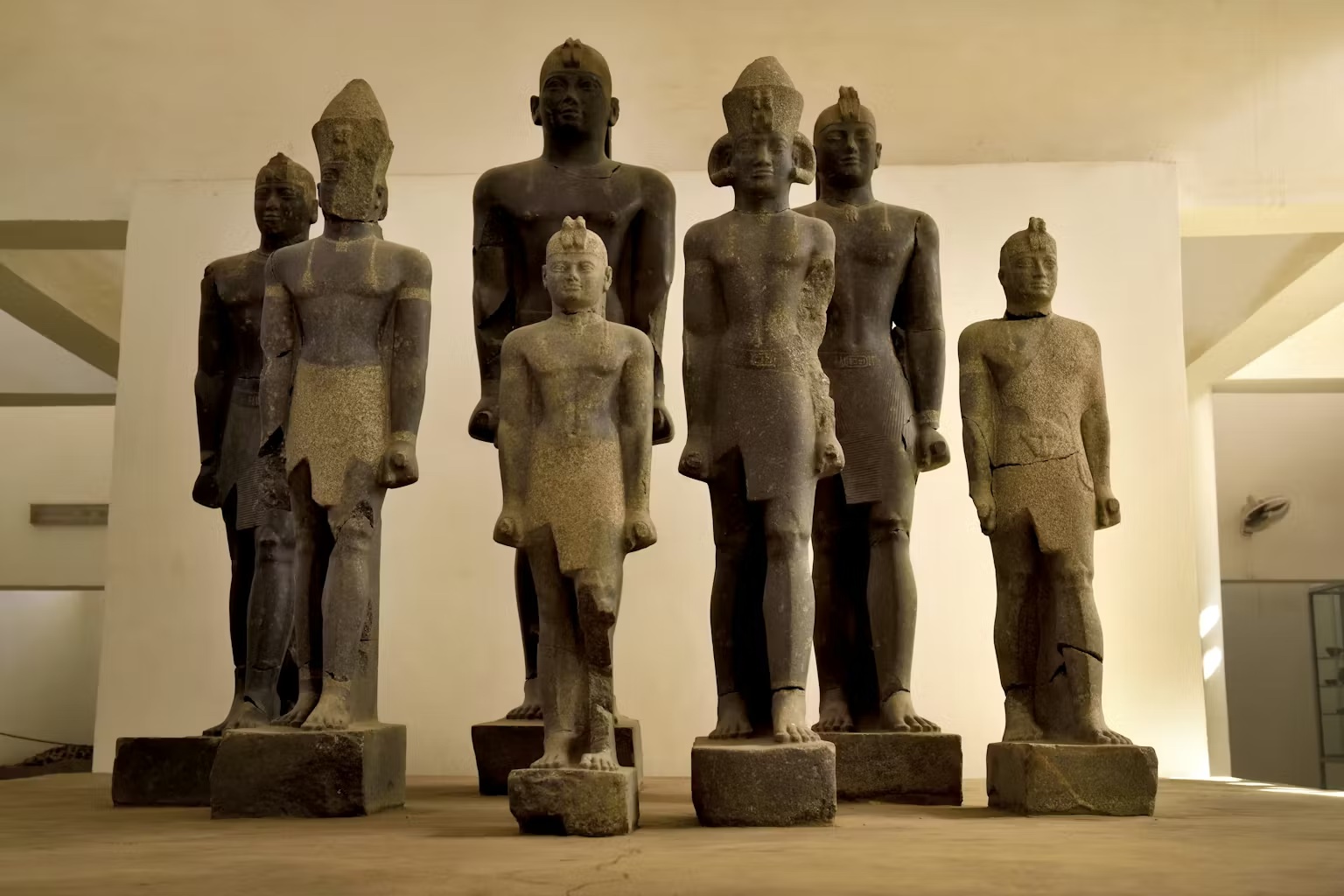
The National Museum of Sudan in Khartoum once held an estimated 100,000 objects, spanning prehistoric artifacts through Napatan, Meroitic, Christian, and Islamic periods, including ancient mummies, pottery, jewelry, and statuary. Important pieces included royal Kushite regalia and funerary goods from Meroë’s pyramid tombs.
However, the museum was severely looted and destroyed during the ongoing civil conflict starting in April 2023. Videos and satellite imagery later confirmed that many invaluable artifacts were taken from vaults, especially gold and gemstone pieces, with only the heaviest statues remaining.
Destruction of Cultural Memory and Genocide
Sudan descended into war in April 2023 when clashes between the Sudanese Armed Forces (SAF) and the Rapid Support Forces (RSF) erupted into a nationwide conflict. But conflict and what many scholars and international bodies term genocide began nearly two decades earlier in Darfur in 2003, when the Janjaweed militia, backed by elements of the Sudanese government, launched a campaign of ethnic cleansing against non-Arab ethnic groups.
The Darfur genocide constitutes genocide under international law because Black African ethnic groups—including the Fur, Masalit, and Zaghawa—were targeted as such through killings, mass rape, village destruction, and forced displacement. Perpetrators framed these groups as “Zurga” (a racialized slur meaning “Black”) and justified violence through racial hierarchy and Arab supremacist ideology, rather than military necessity. International bodies, including the ICC and the U.S. government, have concluded that the violence was intended to destroy Black African communities as distinct groups, satisfying the intent requirement for genocide.
The International Criminal Court (ICC) has prosecuted figures tied to these atrocities. In October 2025, the ICC convicted Ali Muhammad Ali Abd-Al-Rahman (also known as Ali Kushayb) on 27 counts of war crimes and crimes against humanity, including mass killings and rape, relating to the early years of the Darfur conflict. He was subsequently sentenced to 20 years’ imprisonment — the first conviction arising from the Darfur atrocities.
Genocide and Destruction of Cultural Antiquities
The vandalism of Sudan’s cultural sites is widely seen as part of efforts to obliterate the cultural memory of African civilizations that once flourished in the Nile Valley. Generations of scholarship have shown that these kingdoms’ wealth and global trade networks made them central to early world history. The destruction of these sites not only erases local heritage but impoverishes humanity’s shared understanding of ancient civilizational exchange.
Efforts are underway by UNESCO, Sudanese preservationists, and international archaeologists to digitally archive remaining artifacts, secure stolen pieces, and one day restore damaged sites.
Next week, I will examine the Timbuktu case at the ICC — the only international criminal prosecution focused exclusively on deliberate destruction of cultural property — and explore what it might teach us about protecting Sudan’s endangered heritage.

