
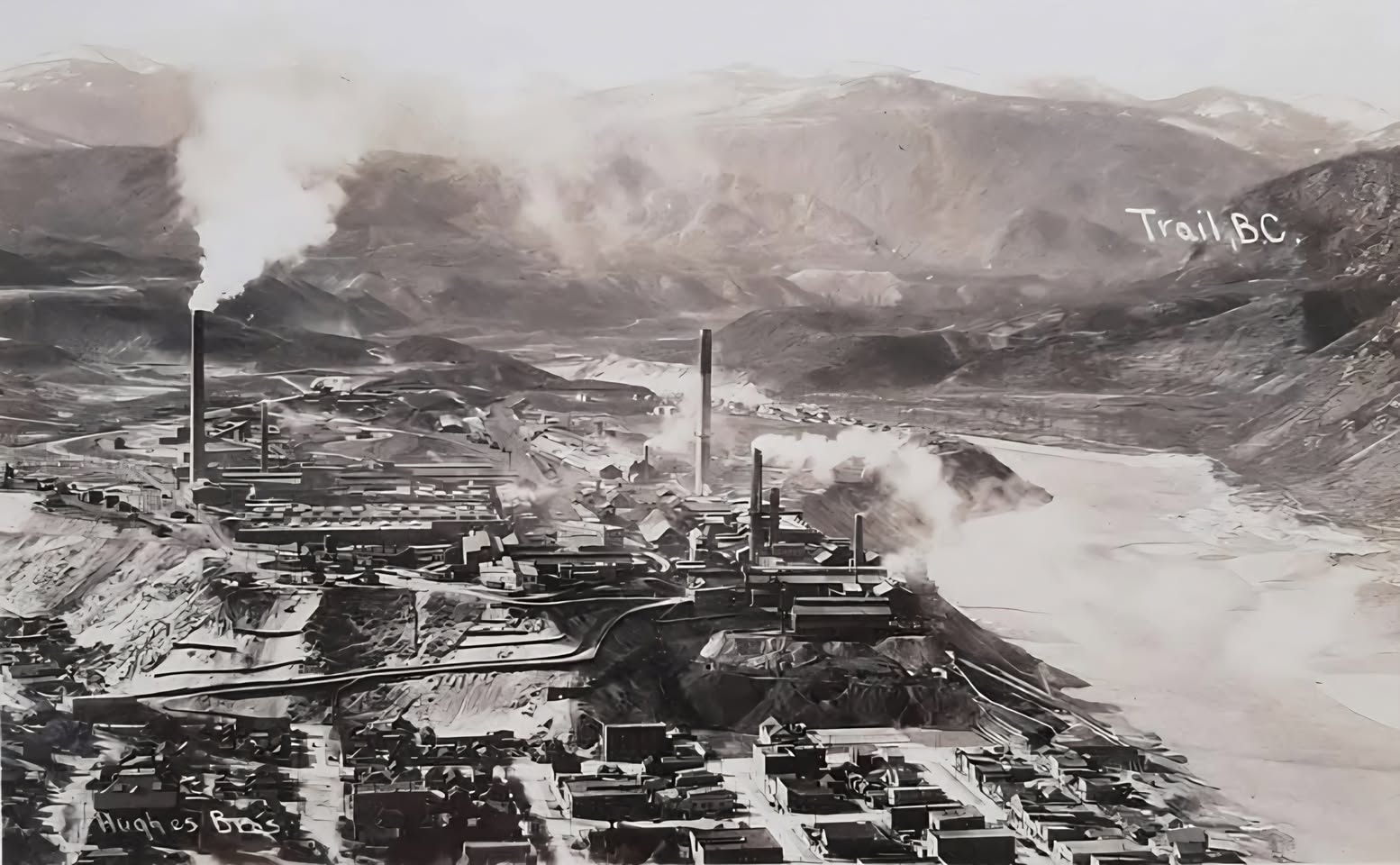
Trail Smelter Arbitration
The Trail Smelter Arbitration (1938 and 1941) arose from sulfur dioxide emissions released by a Canadian smelting operation in Trail, British Columbia, which caused documented damage to crops, forests, and land in the State of Washington. Occurring during a period of rapid industrial expansion and minimal environmental regulation, the dispute reflected growing tensions between national sovereignty and cross-border industrial harm. After diplomatic efforts and an investigation by the International Joint Commission failed to resolve the issue, the United States and Canada submitted the matter to binding international arbitration under the 1935 Convention of Ottawa. The arbitral tribunal held that Canada was responsible for transboundary air pollution originating within its territory and ordered compensation as well as prospective controls. The decision articulated a foundational principle of international environmental and border law: a state may not use or permit the use of its territory in a manner that causes serious injury in another state. This principle continues to shape modern transboundary pollution regulation.
U.S.-Canada Border Dispute
A Canadian-owned smelter in Trail, British Columbia emitted sulfur dioxide fumes that crossed the U.S.–Canada border and damaged agricultural land, timber, and property in Washington State. The U.S. government brought claims on behalf of affected landowners. After investigation by the International Joint Commission failed to produce a binding solution, the governments entered a special arbitration agreement in 1935.
The question then became is Canada internationally responsible for transboundary air pollution originating within its territory that causes substantial injury in the territory of the United States, and if so, what remedies are required?
Air Pollution At Borders
Under international law, no state has the right to use or permit the use of its territory in such a manner as to cause serious injury to another state, when the harm is established by clear and convincing evidence.
The tribunal relied heavily on U.S. nuisance law analogies, scientific evidence, and international principles of state responsibility. It rejected Canada’s argument that the harm was speculative and emphasized documented causation between emissions and damage. The tribunal also imposed prospective obligations, requiring Canada to prevent future harm, not merely compensate for past damages. This forward-looking regulatory regime was unprecedented in international arbitration at the time and directly implicated border governance by recognizing enforceable limits on sovereign industrial activity.
Canada was held internationally liable for the damage caused by the Trail Smelter. The decision established the cornerstone principle of transboundary environmental responsibility in international and border law.
The tribunal ordered both retrospective and prospective remedies. Canada was required to pay monetary compensation to the United States for proven damage to crops, forests, and land in Washington State caused by sulfur dioxide emissions. More significantly, the tribunal imposed a forward-looking regulatory regime, requiring Canada to ensure that the smelter’s future operations did not cause further transboundary harm. This included ongoing monitoring, emission limits, and scientific oversight. The remedies emphasized prevention as well as compensation, marking an early recognition that states have a continuing obligation to control activities within their territory that cause cross-border environmental injury.
Environmental Law and Border Disputes: The No-Harm Rule
The Trail Smelter decision is widely regarded as the foundation of modern international environmental law. Scholars describe it as the first authoritative articulation of the “no-harm rule.”
Philippe Sands, Principles of International Environmental Law, notes that Trail Smelter “transformed diplomatic custom into enforceable legal obligation.”
The American Society of International Law identifies Trail Smelter as the basis for later codification in Principle 21 of the Stockholm Declaration (1972).
The case is routinely cited by the International Court of Justice, including in Corfu Channel and Pulp Mills.
Border Air-Quality Disputes and Developments
The dispute arose along the U.S.–Canada border, where pollution ignored national boundaries. The case reflected a transition from absolute territorial sovereignty toward regulated sovereignty. What's more, the decision set the precedent for future declarations, agreements, and decisions in international courts.
1. Stockholm Declaration on the Human Environment (1972)
Principle 21 directly echoes Trail Smelter’s holding on transboundary harm.
2. U.S.–Canada Air Quality Agreement (1991)
This treaty on acid rain and sulfur dioxide emissions operationalized Trail Smelter principles in bilateral border law.
4. Pulp Mills on the River Uruguay (ICJ 2010)
The ICJ explicitly relied on Trail Smelter’s preventive obligation principle in resolving a transboundary pollution dispute.
Thus, the Trail Smelter Arbitration is the foundational case of international border environmental law, establishing binding state responsibility for cross-border air pollution — a principle still governing disputes nearly a century later.

