
What is Border Law?
Definition: The laws relating to physical border lines between sovereign nations.
Border Law is not studied as a course in itself, despite the fact that physical borders between countries present specific legal problems and complex issues. Borders are often imagined as thin lines on a map—fixed, objective, and purely political. In reality, borders are complex legal spaces where property rights, environmental protection, criminal law, immigration policy, national security, and human rights collide. Border Law is the study of these collisions. It examines how law operates at and around the borders and borderlands of sovereign nations, and how those laws shape land, people, and power.
At its core, Border Law begins with foundational questions: What is a border? Is it a line, a zone, a wall, a river, or a shared ecosystem? Borders define where one nation’s sovereignty ends and another begins, yet they are constantly being redefined through treaties, enforcement practices, and lived experience. From maritime boundaries governed by the Law of the Sea to land borders, borders are legal constructs as much as geographic ones.
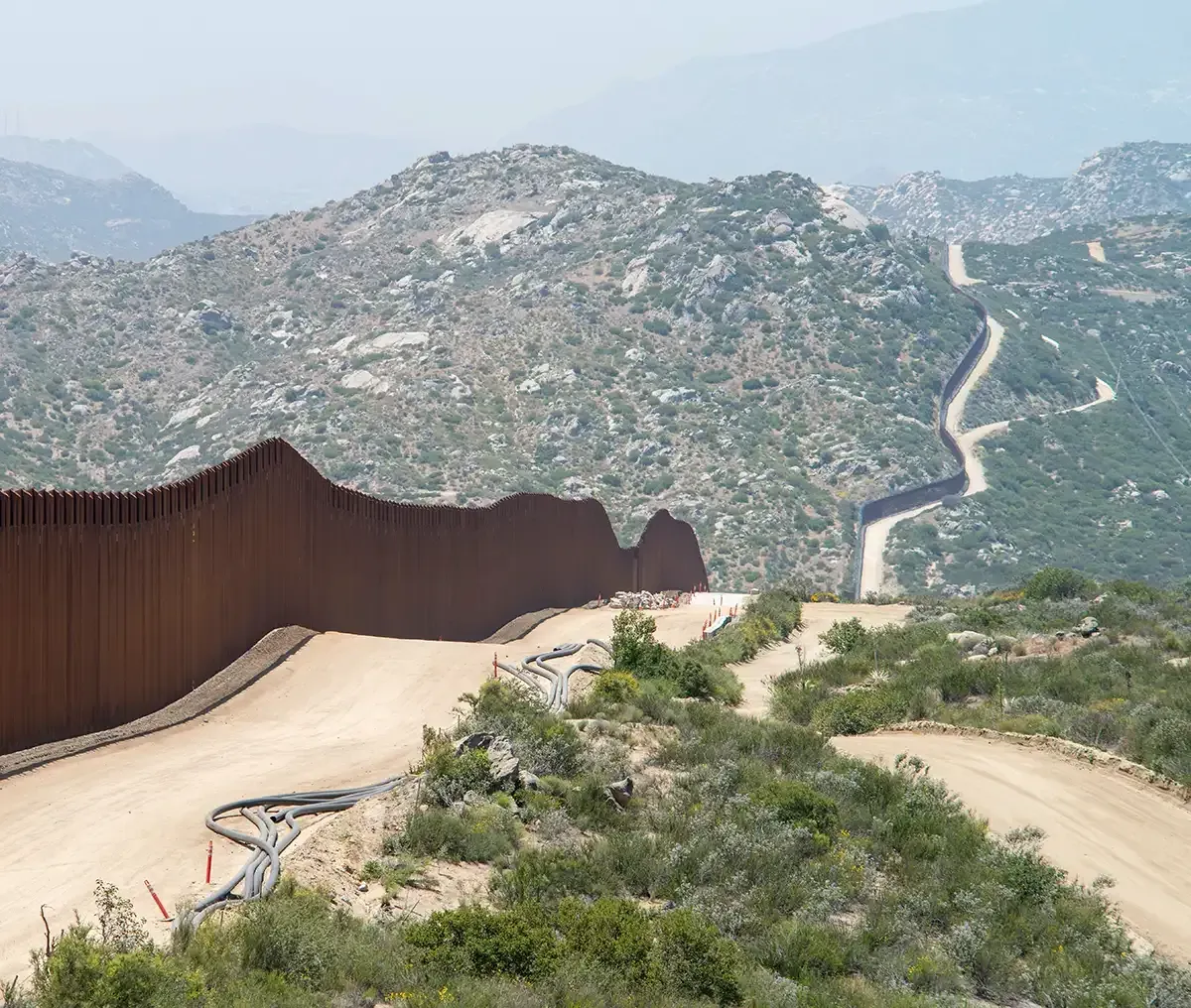
One of the central pillars of Border Law is property law. Borders cut through private land, Indigenous territory, historic sites, and protected ecosystems. When governments build walls, roads, or surveillance infrastructure, questions of eminent domain, ownership, and compensation arise. Who truly owns borderland property—the individual, the nation-state, or humanity itself? International frameworks like the United Nations Convention on the Law of the Sea (UNCLOS) further complicate ownership where borders meet oceans and seabeds.
Closely tied to property is preservation. Borderlands often contain boundary monuments, Native American artifacts, endangered species, and UNESCO-protected sites. Legal regimes must reconcile enforcement priorities with obligations to preserve cultural heritage and nature. In some regions, nations have experimented with “peace parks” and transboundary nature preserves, revealing how cooperation can replace fortification—though not always successfully.
Environmental law is another defining feature of Border Law. Walls and ports of entry disrupt wildlife migration, damage fragile ecosystems, and contribute to air and water pollution that disproportionately affects marginalized border communities. Issues such as groundwater depletion, acid rain, and the basic right to breathe do not respect national boundaries. Border Law forces legal systems to confront whether environmental harm can be justified in the name of security.
Borderlands are also sites where criminal law and immigration law intersect. Smuggling, contraband, document fraud, and enforcement practices raise enduring questions about proportionality, punishment, and state power. Border agents operate with extraordinary discretion, often shielded by immunity doctrines that test the limits of accountability. At the same time, immigration law has long reflected racial hierarchies, from early exclusionary statutes to modern debates over who gets in, who stays, and who is removed.
Finally, Border Law situates borders within broader debates about sovereignty, national security, and human rights. While states assert the right to control territory and entry, international law increasingly recognizes rights to movement, Indigenous land claims, and shared resources. Stateless persons, terra nullius zones, and transborder regions challenge the assumption that every place and every person neatly belongs to a nation-state.
Border Law, then, is not merely about lines—it is about power, identity, and the future of sovereignty itself.

